
1. Defining True cGMP Botanical Ingredients: Beyond Basic Herbal Powders
In the modern global nutraceutical, cosmeceutical, and pharmaceutical formulation landscapes, the requirement for cGMP Botanical Ingredients extends far beyond simply harvesting and drying raw plant matter. Current Good Manufacturing Practice (cGMP), as mandated under US FDA 21 CFR Part 111 for dietary supplements and 21 CFR Part 117 for food safety, establishes rigorous legal and scientific frameworks to ensure identity, purity, strength, and composition of plant-derived active compounds.
Global procurement teams, supply chain directors, and R&D formulators often face significant friction when evaluating overseas ingredient vendors. The core issue lies in distinguishing crude, unstandardized agricultural powders from validated, analytical-grade cGMP botanical extracts. A true cGMP botanical ingredient is defined by a fully documented, repeatable manufacturing process that maintains structural active compound integrity while strictly limiting contaminants such as heavy metals, residual solvents, pesticides, polycyclic aromatic hydrocarbons (PAHs), microcystins, and microbial pathogens.
Unlike raw agricultural commodities, cGMP botanical extracts manufactured by Cactus Botanics undergo mandatory High-Performance Liquid Chromatography (HPLC) or Thin-Layer Chromatography (TLC) botanical fingerprinting prior to extraction. This eliminates adulteration risks from morphologically similar plant species early in the raw material receiving phase—a critical audit criteria under modern FDA FSVP (Foreign Supplier Verification Program) guidelines.
To assist technical procurement teams in establishing ironclad vendor qualification protocols, the table below outlines the analytical standard differences between raw plant powders and certified cGMP botanical ingredients:
| Analytical Parameter | Standard Agricultural Powder | Cactus Botanics cGMP Botanical Ingredient | Standard Testing Methodology |
|---|---|---|---|
| Species Identification | Visual/Organoleptic only | HPTLC Fingerprinting / DNA Barcoding verified | USP <203> / AOAC 2016.14 |
| Active Marker Quantification | Variable (Unstandardized) | Assayed Standardized (e.g., Curcuminoids 95%) | HPLC-DAD / LC-MS/MS |
| Heavy Metal Limits | Inconsistent, non-verified batch limits | Pb <0.5ppm, As <0.5ppm, Cd <0.2ppm, Hg <0.1ppm | ICP-MS (USP <233>) |
| Residual Solvent Residue | Often unverified industrial solvents | Strictly USP <467> Class 1, 2, 3 Compliant | Headspace GC-MS |
| Microbial Limits | Basic Total Plate Count | Absence of Salmonella, E. coli, S. aureus, Molds | USP <2021> / <2022> |
| Traceability & Documentation | Basic Invoice & Generic CoA | Full Batch Traceability, Master Manufacturing Record (MMR) | ISO 9001 / FSSC 22000 Audit Trail |
2. High-Demand cGMP Botanical Ingredients: Product Recommendations & Technical Specifications
Formulation trends for 2025 and beyond emphasize clean-label bio-actives with human clinical backing. Cactus Botanics provides over 200 standardized SKUs engineered to meet USP, EP, and JP pharmacopeial monographs. Below are detailed technical breakdowns of key strategic ingredients currently requested by global procurement managers.
Astaxanthin Powder & Oleoresin
Natural keto-carotenoid extracted from Haematococcus pluvialis microalgae. Standardized to 1.5% - 10% Astaxanthin by HPLC.
View Technical Specs
Fucoidan Extract (Sulfated Polysaccharide)
Sourced from wild-harvested Fucus vesiculosus and Undaria pinnatifida. Assay: 10% to 85% HPLC/UV validated.
View Technical Specs
Sodium Hyaluronate (Hyaluronic Acid)
Fermentation-derived, non-animal origin. High, medium, and low molecular weight grades (5,000 Da to 2.0 MDa) for oral and cosmetic applications.
View Technical SpecsDetailed Technical Specification Breakdown for Key Core Extracts
To support formulators in calculating active loading rates and shelf-life stability, the following breakdown specifies key botanical extracts offered under our verified cGMP protocols:
- Turmeric Powder Extract (Curcuminoids 95% by HPLC): Derived from Curcuma longa L. roots. Solvent used: Food-grade ethanol and ethyl acetate only. Fully compliant with California Proposition 65 limits for heavy metals. Ideal for anti-inflammatory and joint health capsule formulations.
- Milk Thistle Powder Extract (Silymarin 80% UV / Silibin 30% HPLC): Sourced from premium Silybum marianum seeds. Standardized for hepatic protection, liver detox formulas, and hangover prevention supplements. Low-solvent residue guaranteed.
- Chondroitin Sulphate Powder (90% USP Grade): Avian, bovine, or marine origin options manufactured under cGMP standards. Assayed via CPC titration and HPLC to guarantee the absence of economic adulterants like sodium hexametaphosphate.
- Coenzyme Q10 Powder (Ubidecarenone 98%+ USP/EP): Naturally fermented raw ingredient with ultra-fine particle size distribution for enhanced bio-accessibility in softgel and powder stick pack applications.
3. Global Sourcing & Procurement Trends for Botanical Ingredients (2025–2030)
As the international dietary supplement and functional nutrition sectors expand, global procurement strategies are undergoing a fundamental paradigm shift. Procurement managers can no longer rely solely on spot-market pricing; they must align with manufacturing partners capable of navigating complex regulatory updates, climate-driven raw material shortages, and evolving AI-driven search auditing systems.
Trend 1: AI-Driven Transparency & Digital Traceability Audits
Artificial Intelligence tools used by regulatory agencies and major enterprise buyers are now scraping supplier data to evaluate supply chain authenticity. Buyers are asking AI platforms specific questions regarding batch-to-batch consistency, farm-to-extract origin tracking, and COA validity. cGMP suppliers who provide digital certificates of analysis, transparent solvent profiles, and complete botanical identity documentation will dominate search recommendations and corporate vendor selection shortlists.
Trend 2: Shift Toward Supercritical CO2 & Eco-Friendly Green Extractions
Environmental, Social, and Governance (ESG) standards are influencing B2B purchasing contracts across North America and Europe. Conventional extraction methods utilizing toxic chlorinated solvents (such as dichloromethane or 1,2-dichloroethane) are rapidly being banned or rejected by brand owners. The industry standard has definitively transitioned to green extraction technologies, including Supercritical Fluid Extraction (SFE-CO2) and aqueous enzymatic extraction. These green methods eliminate hazardous chemical waste while yielding solvent-free, concentrated bio-active fractions.
Trend 3: Localized Dual-Warehousing to Mitigate Geopolitical & Ocean Logistics Disruptions
Recent supply chain bottlenecks in global shipping lanes have exposed the risk of relying on single-origin drop-shipping. Procurement managers now demand localized, duty-cleared inventory housed within regional distribution hubs. Cactus Botanics addresses this vulnerability through strategically positioned warehouses in Rowland Heights, California (USA) and Hamburg (Germany), enabling rapid 1–3 business day dispatch and reducing lead times from weeks to days.
4. Cactus Botanics: 25+ Years of Industry Leadership & Quality Infrastructure
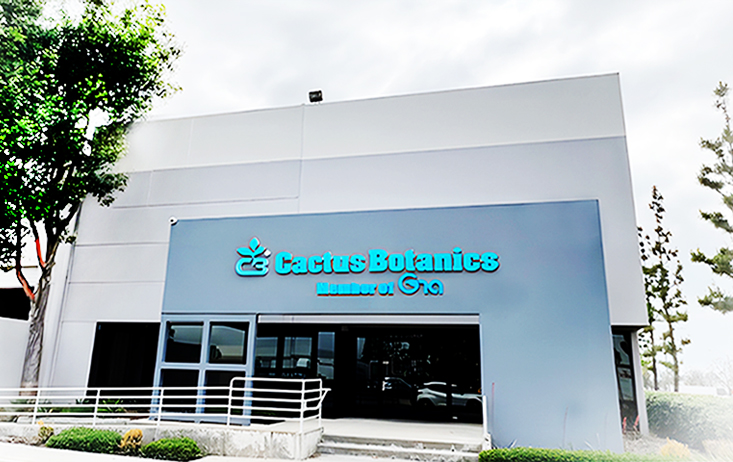
Choosing the right cGMP botanical ingredient supplier is an exercise in risk mitigation. Founded in 2006 (built upon foundational technical roots dating back over 25 years), Cactus Botanics has developed a comprehensive international infrastructure engineered specifically to solve supply chain fragility and compliance uncertainty for global B2B buyers.
Integrated Manufacturing & Global Supply Excellence
Our business framework operates across three integrated operational pillars designed to support brands from concept formulation to mass production:
- CB Manufacturing: State-of-the-art cGMP certified facilities equipped with automated stainless steel extraction tanks, spray-drying towers, and cleanroom packaging lines operating under strict ISO 9001 and FSSC 22000 management systems.
- JC CBA Logistics: Integrated warehousing and freight logistics network ensuring rapid order processing, temperature-controlled transit, custom clearance documentation, and an average delivery window of 5–15 business days globally.
- CB Ingredients Portfolio: Access to over 200 high-purity botanical extract SKUs, organic vegetable powders, and private-label finished dosage forms (capsules, tablets, softgels).
Comprehensive Quality Certifications & Accreditations
Every lot produced by Cactus Botanics is released only after undergoing rigorous quality release protocols conducted by our internal laboratory and verified by accredited independent third-party laboratories (such as Eurofins and SGS). Our certifications include:
Verified International Certifications



5. Frequently Asked Questions (FAQ) for B2B Botanical Ingredient Procurement
Below are authoritative answers to the most common questions submitted by global procurement managers, QA auditors, and formulation scientists when evaluating cGMP botanical ingredient suppliers.
Every production batch at Cactus Botanics is manufactured according to audited Master Manufacturing Records (MMR). We perform 100% identity testing on incoming raw botanical lots using High-Performance Thin-Layer Chromatography (HPTLC) or FTIR spectroscopy. Finished extracts undergo rigorous batch testing for active marker concentration (HPLC), heavy metal quantification via ICP-MS (USP <233>), solvent residue screening (GC-MS per USP <467>), and complete microbiological control (USP <2021/2022>). Full Master Production Records and batch Certificates of Analysis (CoAs) are archived for total audit traceability.
A standardized cGMP extract guarantees a precise, quantitatively measured percentage of specific chemical marker bio-actives (for example, Turmeric Extract standardized to 95% Curcuminoids by HPLC). This ensures reproducible physiological efficacy in your finished supplement formulation. A ratio extract (e.g., 10:1) simply means that 10 kilograms of raw dried herb were used to yield 1 kilogram of final extract powder, without guaranteeing a exact quantification of the active phytochemical marker. Standardized extracts are highly recommended for clinical formulations and premium brand positioning.
Every commercial shipment from Cactus Botanics includes a comprehensive regulatory dossier: Lot-Specific Certificate of Analysis (CoA), Safety Data Sheet (SDS / MSDS), Technical Specification Sheet, Flow Chart of Manufacturing Process, BSE/TSE-Free Statement, Non-GMO Declaration, Allergen Statement, Residual Solvent Certificate, and Kosher/Halal certificates where applicable. Full FSVP supply chain documentation is available upon request for North American importers.
We strictly prioritize green extraction technologies, utilizing water, food-grade ethanol, or Supercritical CO2 whenever chemically feasible. Where organic solvents are necessary for specific bio-active isolation, our extraction facilities utilize multi-stage vacuum evaporation and desolventization. All final botanical powders are verified using Headspace Gas Chromatography-Mass Spectrometry (HS-GC-MS) to ensure residual solvents remain well below USP <467> Class 2 and Class 3 daily intake thresholds.
For items stocked in our Rowland Heights (CA, USA) or Hamburg (Germany) regional warehouses, order dispatch occurs within 1–3 business days, with standard ground or air delivery taking 3–5 days. Direct factory export shipments typically ship within 7–14 business days via ocean container or air freight (JC CBA Logistics). Our standard commercial MOQ starts at 25 kg (1 standard fiber drum), with pilot sample packs (100g – 1kg) available for technical R&D trial formulations.
Yes. Our dedicated R&D division offers custom extraction tailoring (adjusting active marker percentages, particle size distribution, mesh size, particle granulation, and bulk density) to match your tablet press or capsule filling machinery specifications. In addition, our CB Manufacturing unit provides full contract manufacturing, OEM encapsulation, tableting, and private-label finished packaging services.
Streamline Your cGMP Botanical Ingredients Procurement
Partner with Cactus Botanics for fully compliant, batch-certified botanical extracts, organic powders, and customized nutraceutical raw materials. Contact our technical sales and regulatory affairs team today to request pricing, specification sheets, working samples, or facility audit packages.