

Botanical Extracts & Health Ingredients Blog
Explore technical insights, scientific research, and market updates from Cactus Botanics.
In-depth knowledge on botanical extraction methods and global compliance.
How to Choose Chondroitin Sulphate Powder?
Table of Contents
- Define Chondroitin Sulphate Powder: Sources, Forms, and 90–105% Assay
- Compare Bovine, Porcine, and Marine Sources by Purity and Traceability
- Verify Quality Through HPLC Testing, Moisture, Ash, and Heavy-Metal Limits
- Match Molecular Weight and Sulphate Content to Your Intended Application
- Select Dosage and Packaging Based on the Common 800–1,200 mg Daily Range
- FAQS
- Conclusion
- Related Posts
Choosing Chondroitin Sulphate Powder requires more than comparing prices or reading a bold purity claim. The powder may look identical in two bags, yet its source, assay method, moisture level, and molecular profile can differ. Dr. Jason Theodosakis, a physician and author known for his work on joint-support ingredients, has emphasized, “The quality of the product is as important as the ingredient itself.” That principle deserves attention.
A dependable buyer should examine the manufacturing site, batch number, certificate of analysis, and independent laboratory results. Check whether the test confirms chondroitin content, microbial safety, heavy metals, and residual solvents. The source also matters. Bovine, porcine, and marine materials may suit different formulation requirements, dietary preferences, or supply-chain standards. Sodium content can affect product design, especially in concentrated formulas. Ask for evidence, not attractive wording.
The intended use should guide the selection. A capsule manufacturer may need consistent flow and low moisture. A research team may require a defined assay and traceable documentation. A powdered blend may need strong dispersibility and a neutral odor. Small details matter.
Still, no supplier is automatically perfect. Even a polished certificate can leave questions about sampling frequency or method validation. That is where careful review becomes practical experience. Compare several batches when possible. Speak with technical staff. Confirm specifications before committing to a large purchase. Chondroitin Sulphate Powder should be selected through transparent evidence, realistic expectations, and responsible quality control.
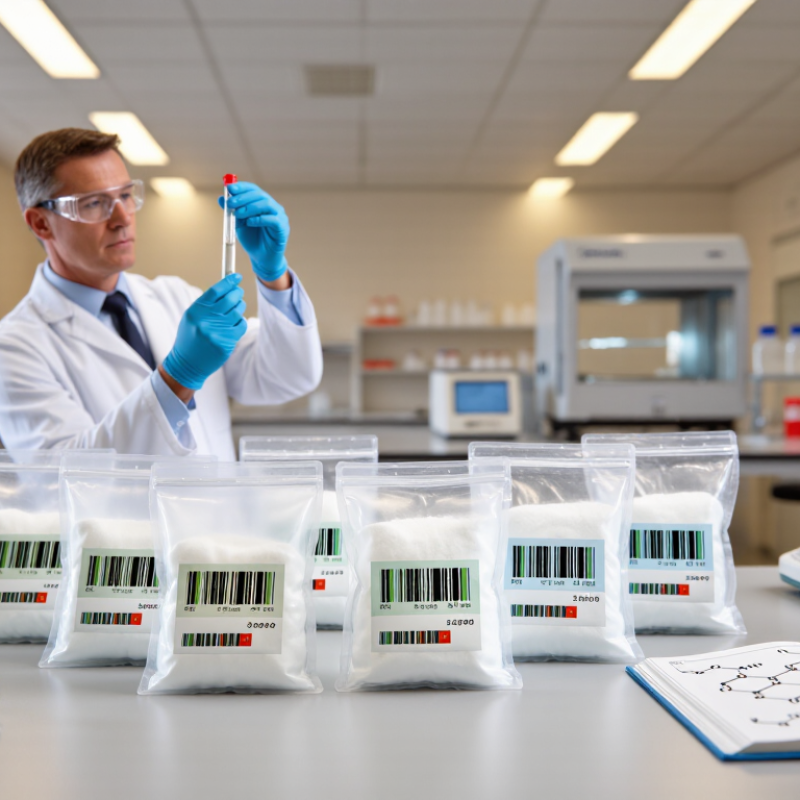
Define Chondroitin Sulphate Powder: Sources, Forms, and 90–105% Assay
Choosing chondroitin sulphate powder starts with knowing what the label actually describes. Chondroitin sulphate is commonly obtained from bovine, porcine, or marine tissues. Source affects traceability, allergen review, religious suitability, and processing expectations. Ask for the species, tissue source, country of processing, and extraction method. Do not accept “animal origin” as enough detail. That shortcut can hide important differences.
Powder is often supplied as a sodium salt, with variations in molecular weight, moisture, and particle size. These properties influence handling, blending, and testing. An off-white color is common, but color alone cannot confirm identity or purity. For a serious quality decision, review a current certificate of analysis for each lot. Look for identity testing, assay, moisture, microbiological limits, heavy metals, and residual processing chemicals.
An assay of 90–105% usually expresses measured chondroitin content against a stated reference or specification. The number is meaningful only when the method, basis, and acceptance criteria are disclosed. Some results use dry-basis calculations, while others include native sample moisture. Comparing them directly can create a false sense of precision. In my experience, suppliers who explain deviations are easier to evaluate than those offering perfect-looking figures. Still, documentation is not proof by itself. Independent laboratory confirmation may be sensible for high-value or sensitive applications. Choose a powder with clear origin, consistent lot data, suitable physical form, and realistic assay control.
Compare Bovine, Porcine, and Marine Sources by Purity and Traceability
How to Choose Chondroitin Sulphate Powder?
When choosing chondroitin sulphate powder, compare both purity and traceability. Bovine material may offer stable supply and clear tissue origins. However, it requires reliable species identification and controls for animal-derived contaminants. Porcine chondroitin often provides consistent processing performance. Its documentation should clearly identify farms, slaughter facilities, and production batches. Marine sources can support alternative sourcing. They may contain different mineral profiles, including iodine or salts, so testing must be carefully selected. No source is automatically superior.
Purity should be confirmed through independent laboratory data, not only a supplier specification sheet. Check assay results, molecular weight, sulphate content, moisture, ash, heavy metals, microbiological limits, and residual processing agents. Analytical methods should be stated clearly, such as validated chromatographic testing. In practical sourcing reviews, missing batch details often create more risk than a slightly lower assay value. I have also found that traceability documents can look complete while lacking farm, vessel, or tissue-level information. That weakness deserves attention.
Tips: Request a recent certificate of analysis for every production lot. Match the lot number on the package with the test report. Ask whether the raw material is bovine, porcine, or marine before comparing prices. Verify species testing and origin records with an independent quality professional. Keep samples for retention testing when possible. A cleaner label does not always mean cleaner material. Suppliers should explain unusual results, rather than simply replacing the report.
Verify Quality Through HPLC Testing, Moisture, Ash, and Heavy-Metal Limits
When choosing chondroitin sulphate powder, ask for a complete certificate of analysis, not a marketing sheet. HPLC should confirm identity and assay, with a validated method, reference standard, chromatogram, and batch number. A reported assay near the specification matters, but the method matters more. USP–NF quality guidance emphasizes validated identity, purity, and contaminant testing for pharmaceutical ingredients.
Check moisture using loss-on-drying or Karl Fischer testing. Excess moisture can cause clumping and reduce storage stability. Ash testing, commonly aligned with USP <281>, helps reveal inorganic residue or unwanted processing materials. Compare the result with the agreed specification; there is no universal limit for every grade. Small differences can matter.
Heavy metals deserve stricter attention. Ask whether ICP-MS or ICP-OES was used, and request individual results for lead, arsenic, cadmium, and mercury. USP General Chapter <2232> provides a recognized framework for elemental contaminants in dietary ingredients. Some buyers use tighter internal limits than published compendial guidance. That is sensible. A single “pass” statement feels weak. Review the actual numbers, detection limits, laboratory accreditation, and test date. Even a clean report cannot replace supplier audits or independent retesting. Quality decisions are rarely perfect.
| Quality Dimension | Recommended Acceptance Criterion | Typical Test Method | Why It Matters | How to Interpret the Result |
|---|---|---|---|---|
| Identity | Conforms to the applicable monograph and reference standard | Infrared spectroscopy, chromatographic identity testing, and/or characteristic color reaction | Confirms that the material is chondroitin sulphate rather than another sulphated polysaccharide or an undeclared blend. | Request the identity spectrum or chromatogram together with the batch-specific certificate of analysis. |
| HPLC Assay | Typically 90.0%–105.0% on the stated basis, unless the applicable specification requires a different range | Validated HPLC or UPLC method, commonly using enzymatic depolymerization followed by chromatographic measurement against a qualified reference standard | Measures the actual chondroitin sulphate content and helps detect dilution, substitution, or inconsistent potency. | The result is meaningful only when the report states the test basis, reference standard, calculation formula, chromatogram, and method validation details. |
| Disaccharide Profile | Pattern and relative proportions comply with the agreed raw-material specification | HPLC, HPAEC-PAD, or UPLC after enzymatic digestion with suitable chondroitinases | Provides information about sulphation pattern and source consistency, which may not be revealed by a simple total-assay result. | Compare the profile with an approved reference batch and investigate unusual peaks or major changes in composition. |
| Moisture / Loss on Drying | Usually not more than 10.0% for powder specifications | Loss on drying or Karl Fischer water determination; the selected method should be stated on the report | Excess moisture can accelerate degradation, promote microbial growth, increase clumping, and distort the calculated assay. | A result above the agreed limit should trigger review of drying conditions, packaging integrity, and storage humidity. |
| Total Ash / Residue on Ignition | Commonly not more than 30.0%, subject to the applicable monograph and product grade | Residue on ignition or total ash determination | Reflects inorganic salts and mineral residue. An unusually high value may indicate excess process salts, contamination, or formulation with undisclosed inorganic material. | Assess ash together with sodium content, chloride, sulphate, and assay results; do not judge purity from ash alone. |
| Lead (Pb) | Preferably not more than 2.0 mg/kg (ppm), or the lower limit required by the destination market | ICP-MS, ICP-OES, or validated atomic absorption spectroscopy | Lead is a toxic elemental contaminant that may originate from raw materials, water, equipment, or processing environments. | Verify that the result is reported as elemental lead and that the laboratory uses a validated, contamination-controlled procedure. |
| Arsenic (As) | Preferably not more than 1.0 mg/kg (ppm), or the lower limit required by the destination market | ICP-MS, ICP-OES, or validated atomic absorption spectroscopy | Arsenic contamination can be associated with marine or animal-derived raw materials and may present significant health risks. | Ask whether the result represents total arsenic or speciated arsenic when the regulatory framework requires speciation. |
| Cadmium (Cd) | Preferably not more than 1.0 mg/kg (ppm), or the lower limit required by the destination market | ICP-MS, ICP-OES, or validated atomic absorption spectroscopy | Cadmium can accumulate in biological materials and may enter the supply chain through environmental exposure. | Compare the result with the legal limit for the intended use, country, and daily serving level. |
| Mercury (Hg) | Preferably not more than 0.1 mg/kg (ppm), or the lower limit required by the destination market | Cold-vapor atomic absorption, ICP-MS, or another validated mercury-specific method | Mercury is particularly relevant for marine-derived materials and requires sensitive analytical control. | Confirm that the laboratory reports mercury separately and provides the method detection limit. |
| Microbial Quality | Must comply with the applicable food, supplement, or pharmaceutical microbiological specification | Total aerobic microbial count, total yeast and mold count, and specified pathogen testing | Moisture, handling, and storage conditions can affect microbial quality even when chemical assay results are acceptable. | Review batch results for relevant pathogens, such as Salmonella, and confirm that sampling and testing follow recognized procedures. |
| Particle Size | Set according to the intended application; for example, a defined sieve-passing percentage | Analytical sieving or laser diffraction | Particle size affects flowability, blending uniformity, dissolution behavior, and filling performance. | Use a particle-size limit that matches the manufacturing process rather than selecting the finest powder by default. |
| Bulk Density | Establish a batch-to-batch range based on process capability | Untapped and tapped density measurement | Density variation can cause inaccurate dosing, inconsistent capsule or tablet fill weight, and packaging-volume problems. | Trend the result over multiple batches instead of relying on a single measurement. |
| Traceability | Complete batch documentation with manufacturing date, expiry or retest date, test date, and laboratory identification | Document review and certificate-of-analysis verification | Traceability supports supplier qualification, complaint investigation, recalls, and regulatory compliance. | Prefer batch-specific data over generic specification sheets or undated test summaries. |
| Packaging and Storage | Moisture-protective, sealed packaging; store in a cool, dry place according to the approved specification | Packaging inspection, seal verification, and storage-condition review | Chondroitin sulphate powder can absorb moisture, leading to caking and changes in handling properties. | Check container integrity, desiccant use where applicable, storage humidity, and transport exposure before acceptance. |
| Note: The limits above are practical screening values commonly used for qualification. Final release criteria must follow the applicable pharmacopoeial monograph, food or supplement regulation, destination-market requirements, intended daily intake, and the purchaser’s validated specification. HPLC, moisture, ash, and heavy-metal results should be reviewed together with identity, microbiological quality, batch traceability, and method details. | ||||
Match Molecular Weight and Sulphate Content to Your Intended Application
How to Choose Chondroitin Sulphate Powder?
Molecular weight should follow the final application, not merely the supplier’s headline specification. Commercial chondroitin sulphate commonly spans roughly 10–100 kDa, according to published polysaccharide characterization studies. Lower molecular weight grades usually dissolve faster and create less viscosity. Higher molecular weight grades may provide stronger film-forming and rheological properties. That difference matters in capsules, beverages, topical gels, and laboratory formulations. It is not a universal quality ranking.
Sulphate content also deserves careful attention. Published compositional studies commonly report approximately 13–16% sulphate in sodium chondroitin sulphate, depending on moisture, counterions, and analytical method. Sulphation affects charge density and interaction with proteins. However, more sulphate does not automatically mean better performance. The USP–NF and European Pharmacopoeia monographs emphasize identity, assay, purity, and contaminant control rather than one “ideal” molecular weight. Ask for SEC or GPC data, sulphate testing, moisture results, and structural confirmation by NMR or chromatography. These details reveal more than a simple purity percentage.
I would also question unusually precise claims. Natural material varies. Processing can reduce chain length or alter sulphation patterns. A powder for oral use may need different specifications from a research reagent or a viscous topical system. Choose the narrowest practical molecular-weight range, then confirm the sulphate result using a validated method. My earlier shortcut was trusting assay alone. That approach is incomplete.
How to Choose Chondroitin Sulphate Powder?
Match Molecular Weight and Sulphate Content to Your Intended Application
Lower-molecular-weight chondroitin sulphate is commonly considered for formulations requiring easier processing and dissolution, while higher-molecular-weight material is often selected for biomaterial and research applications where polymer-chain length is important. Sulphate content is typically evaluated together with identity, purity, moisture, ash, and counter-ion specifications. The values shown are representative technical ranges rather than universal product specifications.
Select Dosage and Packaging Based on the Common 800–1,200 mg Daily Range
How to Choose Chondroitin Sulphate Powder?
Select Dosage and Packaging Based on the Common 800–1,200 mg Daily Range
The common daily range is 800–1,200 mg. The NIH National Center for Complementary and Integrative Health reports that clinical studies have used similar amounts, although protocols vary. The European Medicines Agency also lists 800–1,200 mg daily for certain chondroitin sulphate preparations. This range is a useful purchasing reference, not a universal prescription. Age, product purity, and intended use can change the practical choice.
Start with the serving size. A powder providing 1,000 mg per measured scoop may simplify daily use. A lower-strength powder allows finer adjustments, but it demands a reliable scale. Packaging should protect the powder from moisture, heat, and repeated air exposure. An opaque, resealable pouch or tightly sealed container is usually more practical than a wide-open jar. Check the net weight against the intended supply period. A 100-gram pack provides about 83 days at 1,200 mg daily, before handling losses.
Tips: Request a certificate of analysis. Confirm assay, moisture, microbiological limits, molecular-weight information, and source materials. Sodium content also matters for some users. Do not rely on a large scoop alone. Testing reports can look reassuring, yet batch details may be incomplete. That is where careful review is still needed. If anticoagulants or regular medicines are involved, professional advice is sensible before use.
FAQS
It usually comes from bovine, porcine, or marine tissues. Ask for the exact species and tissue source.
Source affects traceability, allergen review, religious suitability, and processing controls. “Animal origin” is too vague.
No. Color can support a basic check, but it cannot confirm identity or purity. Appearance is only one small clue.
Check identity, assay, moisture, molecular weight, microbiological limits, heavy metals, and residual processing chemicals. Match the lot number carefully.
It usually compares measured chondroitin content with a stated reference or specification. The method and calculation basis must be disclosed.
Not always. One result may use a dry basis, while another includes sample moisture. That difference can mislead comparisons.
None is automatically superior. Marine material may need iodine and mineral testing, while animal sources need stronger species controls.
Studies and product specifications often reference 800–1,200 mg daily. This is a purchasing guide, not a universal prescription.
Choose an opaque, resealable pouch or tightly sealed container. It should reduce moisture, heat, and repeated air exposure.
Not always. A 1,000 mg serving may simplify use, but a lower-strength powder needs an accurate scale. Small errors matter.
Conclusion
Choosing the right Chondroitin Sulphate Powder requires evaluating its source, chemical profile, quality, and intended use. Common sources include bovine, porcine, and marine materials, each offering different considerations regarding purity, consistency, and traceability. Buyers should confirm the product form and assay range, typically around 90–105%, and request reliable testing data. HPLC analysis can help verify identity and potency, while moisture, ash, and heavy-metal specifications provide additional insight into product cleanliness and stability.
The powder’s molecular weight and sulphate content should match the requirements of the final application, since these characteristics may affect processing performance and formulation suitability. It is also important to select a practical dosage and packaging format. Many applications are designed around a commonly used daily intake of approximately 800–1,200 mg, although the final amount should reflect product specifications and intended use. Clear documentation, suitable packaging, and consistent batch testing can support better purchasing decisions.

Blog Tags: