
Botanical Extracts & Health Ingredients Blog
Explore technical insights, scientific research, and market updates from Cactus Botanics.
In-depth knowledge on botanical extraction methods and global compliance.
10 Best Dehydrated Vegetable Powders for Bulk Buyers
Table of Contents
- What Dehydrated Vegetable Powders Are and How They Are Made
- How Bulk Buyers Can Compare Powders for Quality and Value
- The 10 Best Dehydrated Vegetable Powders for Bulk Purchasing
- Common Uses for Vegetable Powders in Food Production
- How to Verify, Store, and Manage Bulk Powder Orders
- FAQS
- Conclusion
- Related Posts
Bulk buyers need more than a low price. They need consistent color, flavor, particle size, and performance across repeated orders. Dehydrated Vegetable Powders can simplify soups, sauces, seasoning blends, snack coatings, and prepared meals. Yet a sample that looks bright in a jar may behave differently on a hot production line. That detail matters.
Food-processing author Peter Fellows writes, “Drying is one of the oldest methods of food preservation.” For bulk purchasing, the principle is practical: processing history still shapes quality. Compare ingredient origin, drying method, mesh size, moisture level, packaging, and batch documentation. Ask suppliers for a specification sheet and a recent certificate of analysis. Then test the powder in your actual recipe, not only in water.
This guide reviews ten options through a buyer’s lens: common uses, strengths, limitations, and questions worth asking suppliers. Some powders disperse quickly but lose fresh aroma during heating. Others taste fuller yet form small lumps in humid storage. Neither trade-off is always obvious from a product page. We also consider order quantities, shelf-life information, and supply consistency, which may vary by season and region. A ranking is a starting point, not a substitute for production trials. There may be gaps in public specifications. Verify them directly before committing to a large order.
What Dehydrated Vegetable Powders Are and How They Are Made
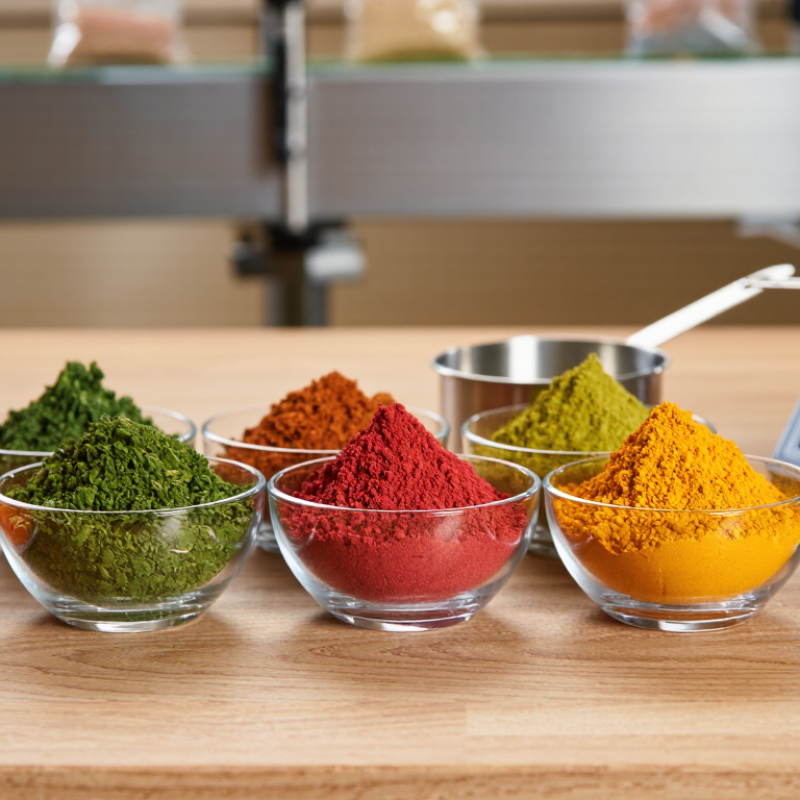
Dehydrated vegetable powders are made by removing most of the water from vegetables and milling the dried pieces into a fine powder. Common choices include carrot, spinach, tomato, onion, and beet. Simple idea. But the final powder is not just dried vegetable dust. Variety, harvest maturity, and processing conditions can all affect its color, flavor, and how it mixes into food.
Production usually begins with sorting and washing, followed by trimming and cutting vegetables into even pieces. Some vegetables are blanched briefly to help preserve color and slow enzyme activity; others may need a different treatment. The pieces are dried using controlled hot air or, for some products, freeze-drying. Once dry, they are milled and sieved to create a more consistent particle size. Small details matter. Uneven drying can leave damp pieces that affect storage quality.
For bulk buyers, useful checks include ingredient identity, moisture specifications, particle size, packaging integrity, and available food-safety documentation. A vivid green color may look appealing, but color alone does not confirm quality. Powders can also settle or clump after opening, especially in humid kitchens. That part is easy to underestimate. It is worth matching the powder’s flavor and texture to its intended use, since a fine carrot powder may blend smoothly into a sauce but behave differently in a dry seasoning mix.
How Bulk Buyers Can Compare Powders for Quality and Value
Bulk buyers should compare dehydrated vegetable powders by more than price per kilogram. Check the ingredient list, moisture specification, particle size, and packaging before requesting samples. A powder that looks bright in a sample cup may behave differently in soup or sauce. Test each option in the same recipe, using the same water temperature and mixing time.
Look for a clean, characteristic aroma and an even color. Clumps, stale odors, or wide variation between batches deserve follow-up questions. Ask suppliers for product specifications and recent test documents, then confirm that the details match the lot being offered. Small details matter. Also compare how quickly the powder disperses and whether it leaves gritty residue. These simple checks will not replace laboratory testing, but they can reveal practical differences.
Value means usable product, not simply the lowest quoted price. Calculate cost alongside expected waste, shipping, storage needs, and shelf life. Check whether bulk packaging protects the powder from moisture after opening, especially if staff will use one bag over several weeks. A comparison sheet helps, though it can make uncertain factors look more precise than they are. Keep sample notes, repeat tests when results seem inconsistent, and leave room for judgment.
The 10 Best Dehydrated Vegetable Powders for Bulk Purchasing
For bulk purchasing, the best dehydrated vegetable powders are not simply the brightest or cheapest. Tomato, onion, and garlic powders suit sauces, soups, and seasoning blends, where strong flavor matters. Carrot, beet, and pumpkin powders add color and mild sweetness. Spinach, kale, sweet potato, and bell pepper powders offer different flavor and formulation options. A useful shortlist, not a universal ranking.
FAO’s 2019 State of Food and Agriculture estimated that 14% of food is lost between harvest and retail, excluding retail losses. Drying can make vegetables easier to store and transport, but powder quality still depends on raw material, drying method, and packaging. Ask for moisture and microbiological specifications, allergen controls, a certificate of analysis, and lot-level traceability. Check how each powder disperses in your actual recipe. Clumping can surprise you.
Bulk buyers should compare color, aroma, particle size, and performance after rehydration, alongside price per usable kilogram. Review the stated shelf life and storage conditions; heat and humidity can dull flavor or cause caking after opening. USDA FoodData Central can help compare nutrient data, but values vary by variety and processing. That detail is easy to overlook. A sample batch may reveal problems that a specification sheet misses.
Common Uses for Vegetable Powders in Food Production
Vegetable powders help food producers add recognizable color and savory depth without handling fresh produce at every production stage. Tomato powder can bring body to dry soup mixes, while spinach or beet powder can tint pasta dough, crackers, and seasonings. Small amounts matter. A measured scoop can spread flavor more consistently through a large batch than chopped vegetables, though mixing time and particle size affect the result.
In sauces, fillings, and instant meals, powders can contribute vegetable solids and reduce some preparation steps. They also suit dry blends, such as coating mixes, bouillon-style seasonings, and snack dusts. The powder needs enough moisture to disperse; otherwise, small clumps may remain after mixing. Try it in a pilot batch first. That step is easy to overlook. Heat, acidity, and storage can shift color and flavor, so a sample that tastes right before cooking may not taste identical in the finished product.
For bakery and extruded foods, vegetable powders can provide color and a mild flavor note, but they are not a direct replacement for fresh vegetables. Their water content is much lower, and stronger colors may affect the appearance of the finished item. Bulk buyers should check particle size, moisture specifications, and consistency between lots. Still, a specification sheet cannot tell the whole story. A practical production trial can reveal whether the powder blends cleanly, changes texture, or needs adjustment in the recipe.
Common Uses for Vegetable Powders in Food Production
The chart shows how many of ten common vegetable powders may suit each application, based on broad formulation fit. Counts are illustrative, not sales, market-share, or industry-survey data; actual suitability depends on the powder, recipe, and processing conditions.
How to Verify, Store, and Manage Bulk Powder Orders
Bulk orders need lot-level checks, not just a polished specification sheet. Request a certificate of analysis tied to the lot number, with moisture or water activity, microbiological results, allergen controls, and country of origin. Compare the document with a retained sample: color, aroma, particle size, and clumping can reveal mismatches. Codex’s Code of Hygienic Practice for Low-Moisture Foods (CXC 75-2015) stresses controls that prevent contamination during handling and processing. Low moisture does not mean zero risk.
Inspect incoming sacks for punctures, damp corners, broken seals, and readable batch codes. Record the supplier lot, arrival date, quantity, and inspection result before releasing stock. FAO’s 2019 State of Food and Agriculture estimated that 13.8% of food was lost between harvest and retail in 2016. That figure covers food broadly, but it is a useful reminder: storage and handling matter. Small checks help.
Store powder in sealed, food-grade containers, away from sunlight, heat, strong odors, and wet cleaning zones. Keep bags off the floor and away from exterior walls; use first-expiring, first-out rotation. Log room conditions and opening dates, and reseal opened liners promptly. Set acceptance limits with a qualified food-safety professional; one moisture target will not fit every vegetable powder. A clean certificate is not the whole story. Clumping can be easy to miss.
FAQS
They are vegetables with most water removed, then milled into fine powder. Carrot, spinach, tomato, onion, and beet are common choices.
Vegetables are sorted, washed, trimmed, and cut into even pieces. Some are briefly blanched before hot-air drying or freeze-drying. The dried pieces are milled and sieved.
Vegetable variety, harvest maturity, and processing can change color, flavor, and mixing behavior. Bright color alone is not proof of quality.
Request lot-linked test results covering moisture or water activity, microbiology, allergen controls, and country of origin. Compare them with a retained sample.
Check its color, aroma, particle size, and clumping. A mismatch may be visible. I might still miss a subtle difference.
Look for punctures, damp corners, broken seals, and readable batch codes. Record the lot, arrival date, quantity, and inspection result.
Keep it sealed in a food-grade container, away from heat, sunlight, strong odors, and wet cleaning areas. Reseal the liner promptly.
Keep bags off floors and away from exterior walls. Track room conditions and opening dates, and rotate stock by expiry. Small checks matter.
Conclusion
This guide explains what Dehydrated Vegetable Powders are, how fresh vegetables are processed into shelf-stable powders, and what bulk buyers should consider when comparing products. It covers practical quality and value factors, including ingredient composition, color, flavor, texture, moisture level, packaging, and consistency between batches. The guide also introduces ten commonly purchased vegetable powder types, helping buyers identify options that may suit different production needs and budget priorities.
It also explores how vegetable powders can be used in soups, sauces, seasonings, snacks, baked goods, and other food products. To support reliable purchasing, the guide outlines ways to verify product details, evaluate samples, and plan orders. Proper storage and inventory management can help preserve freshness, reduce waste, and maintain a dependable supply for food production.

Blog Tags: