
Cactus Botanics Botanical Research and News
Industry Insights & Updates

Botanical Extracts & Health Ingredients Blog

Explore technical insights, scientific research, and market updates from Cactus Botanics.

Scientific Research & Production Insights
Quality & Science Nutraceutical Innovations & Scientific Standards

In-depth knowledge on botanical extraction methods and global compliance.

0%

Choosing the 2026 best Milk Thistle Powder Extract manufacturers requires more than comparing prices or polished websites. Buyers need evidence of identity, purity, traceability, and consistent production. A reliable manufacturer should provide botanical authentication, standardized silymarin specifications, pesticide screening, heavy-metal results, microbial testing, and current certificates of analysis.

Dr. Michael T. Murray, a recognized naturopathic physician and natural-medicine author, has described milk thistle as “one of the most researched herbs for liver support.” That perspective is useful, but it should not replace responsible evaluation. Extract quality depends on the plant source, extraction solvent, concentration method, storage conditions, and final testing. A darker powder is not automatically stronger. Sometimes, it only signals processing differences.

Look closely.

This guide examines manufacturers through an evidence-based procurement lens. It considers GMP or equivalent quality systems, production capacity, batch consistency, documentation, packaging controls, and technical support. It also reviews whether suppliers clearly distinguish Milk Thistle Powder Extract from simple ground seed powder. That difference affects specifications, labeling, formulation, and cost.

A strong supplier should answer practical questions without hesitation. Can it provide recent batch records? Are test methods disclosed? Does it support stability data and export documentation? Are claims reviewed for regulatory compliance in the target market?

No manufacturer is perfect. Even established companies may show gaps in communication or documentation. That is why this ranking should be treated as a starting point, not a final purchasing decision. Independent testing remains wise, especially for long-term contracts, sensitive formulations, and high-volume production.
2026 Best Milk Thistle Powder Extract Manufacturers?

What Is Milk Thistle Powder Extract?

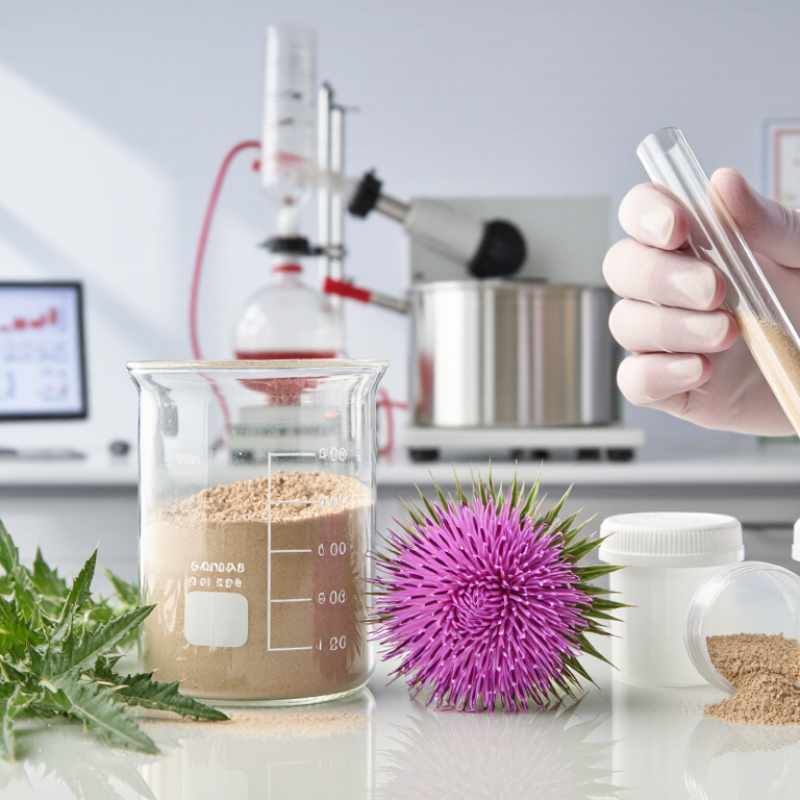
Milk thistle powder extract comes from the seeds of Silybum marianum, a flowering plant recognized by its purple blooms and prickly leaves. The seeds contain silymarin, a group of flavonolignans that includes silybin, silydianin, and silychristin. Extracting these compounds creates a more concentrated ingredient than ordinary ground seed powder.

The production method matters. A manufacturer may use water, ethanol, or another permitted extraction system, followed by filtration and drying. The final powder should show its extraction ratio and silymarin standardization. For example, “80% silymarin” gives buyers more useful information than a vague botanical name. Still, percentages can confuse. They may describe the extract blend, not one isolated compound.

Reliable manufacturers usually test each batch for identity, microbial limits, heavy metals, pesticides, and residual solvents. I also look for a current certificate of analysis, traceable seed sourcing, and controlled drying temperatures. Darkened powder, a sharp odor, or uneven texture can signal storage or processing problems, although appearance alone proves little. The powder should remain dry and free-flowing.

No extraction method is perfect. Some processing choices can improve concentration but reduce certain natural components. This trade-off deserves attention. Buyers should compare laboratory results, manufacturing standards, packaging protection, and batch consistency rather than trusting a polished label. That practical check often reveals more than marketing language.

What Is Milk Thistle Powder Extract?

Milk thistle powder extract is produced from the fruit of Silybum marianum and is concentrated for its naturally occurring silymarin complex, a group of flavonolignans including silybin, silydianin, and silychristin.

The chart shows commonly reported silymarin concentration ranges by material type: approximately 1–3% in whole milk thistle fruit powder and about 50–80% in standardized milk thistle extracts. Actual values can vary according to cultivar, plant part, extraction method, and analytical assay.

How to Assess Milk Thistle Extract Manufacturers in 2026

Assessing Milk Thistle Extract Manufacturers in 2026 requires more than comparing prices. A reliable supplier should explain the botanical source, plant part, extraction method, and standardization level. Ask whether each batch is tested for silymarin content, heavy metals, pesticides, microbes, and residual solvents. Independent laboratory reports matter. A polished certificate alone is not enough.

Review the manufacturer’s quality system and production records. Look for documented GMP procedures, calibrated equipment, trained staff, and clear batch traceability. The supplier should provide samples from different production lots, not only one attractive sample.

Packaging also deserves attention. Moisture, heat, and light can affect powdered extracts during storage. Request stability data and realistic shelf-life evidence. Look closer.

In practical evaluations, I would contact the quality team with technical questions. Their response can reveal real expertise. Do they explain testing limits clearly? Can they identify the laboratory and method used? Can they discuss failed batches without avoiding the issue? These details support trust more than impressive marketing language.

Still, no manufacturer is flawless. Documents may contain small inconsistencies, and specifications can change after approval. I would record every clarification, compare records across lots, and require written notice for process changes. A factory visit or independent audit can expose gaps that a website never shows. Experience helps, but careful verification matters more.

Key Quality, Purity, and Safety Standards

Choosing a strong milk thistle powder extract manufacturer in 2026 requires more than a polished website. Quality begins with authenticated botanical material, including documented species, plant part, harvest region, and lot history. Experienced teams should explain how seeds are cleaned, dried, milled, and extracted. Ask whether the powder is standardized for silymarin and which test method supports that figure. HPLC data is more useful than a vague “high potency” statement. Small details matter.

Purity testing should cover microbial contamination, heavy metals, pesticide residues, mycotoxins, and residual solvents. Independent laboratory results can strengthen confidence, but a certificate of analysis must match the actual lot number. Check moisture content and particle consistency too. Damp powder may cake inside a sealed pouch and lose handling quality. A reliable facility follows GMP-based controls, validates cleaning procedures, and maintains traceable records from raw material to shipment. Safety also includes allergen controls, secure packaging, and realistic storage instructions. “Natural” is not a safety certificate.

During supplier reviews, request recent stability data and investigate deviations instead of accepting perfect paperwork. Some documents look complete but lack test limits, methods, or signatures. That is a warning. I would compare three production lots, not one convenient sample. Results can vary with harvest conditions, extraction temperature, and storage time. Clear communication about failures builds more trust than confident promises. The best manufacturer is not always the cheapest or most polished. It is the one that shows consistent evidence, admits uncertainty, and corrects problems before shipment.

2026 Best Milk Thistle Powder Extract Manufacturers? - Key Quality, Purity, and Safety Standards

Evaluation Dimension Recommended Quality Benchmark Recommended Test or Evidence Why It Matters Risk-Control Rating
Botanical identity Silybum marianum (L.) Gaertn.; the plant part should be clearly identified as fruit or seed material. Macroscopic and microscopic examination, authenticated reference material, and chromatographic fingerprinting. Confirms that the raw material is milk thistle and helps prevent substitution or adulteration. Essential
Active marker specification A declared silymarin or flavonolignan specification, expressed on a clearly stated basis such as dry weight; commercial extracts are often standardized near 70–80% silymarin, but the specification must be contractually defined. Validated HPLC or equivalent chromatographic assay covering relevant flavonolignans, including silybin where applicable. Controls potency and reduces batch-to-batch variability. Essential
Extract ratio and carrier declaration The native extract ratio, extraction solvent, processing aids, and any carriers or excipients should be disclosed and consistent with the specification. Batch manufacturing record, product specification, and certificate of analysis (CoA). Prevents misleading potency calculations and supports accurate formulation. High
Solvent and process safety Residual solvents should comply with applicable destination-market requirements, with Class 1 solvents avoided unless specifically justified. Headspace gas chromatography; acceptance criteria aligned with ICH Q3C or the applicable pharmacopoeial standard. Limits toxic solvent residues from extraction and drying. Essential
Heavy metals and elemental impurities Lead, cadmium, arsenic, and mercury should comply with the limits applicable to the intended market, dosage form, and daily intake. ICP-MS or ICP-OES using a validated method; risk assessment should consider ICH Q3D or destination-market requirements. Controls cumulative exposure to toxic elemental impurities. Essential
Pesticide residues Results should meet the maximum residue limits of the target market; testing should cover pesticides relevant to the crop, region, and supply chain. Multi-residue LC-MS/MS and GC-MS/MS, supported by a documented agricultural and supplier-risk assessment. Detects agricultural chemical residues that may remain after harvesting and processing. Essential
Microbiological quality Total aerobic microbial count, total yeast and mold count, and specified pathogens should meet the limits for the intended product category. Pharmacopoeial methods such as USP <61>, USP <62>, or equivalent validated methods; absence of relevant pathogens should be confirmed where required. Reduces spoilage and microbiological safety risks in a plant-derived powder. Essential
Mycotoxins and aflatoxins Aflatoxin B1 and total aflatoxins should comply with the legal limits of the destination market; additional mycotoxins may be included based on risk. HPLC-FLD with immunoaffinity cleanup or LC-MS/MS. Controls toxins that can develop when botanical materials are improperly dried or stored. Essential
Moisture and water activity A documented moisture specification should be established to support powder stability; water activity should be controlled where microbial or caking risk warrants it. Loss-on-drying or Karl Fischer testing; water-activity measurement where included in the quality system. Helps prevent caking, degradation, microbial growth, and loss of flowability. High
Foreign matter and adulteration No visible foreign matter; the material should be free from undeclared fillers, dyes, pharmaceutical adulterants, and economically motivated substitutions. Visual inspection, microscopy, identity fingerprint, and targeted adulterant screening based on supply-chain risk. Protects product integrity and supports regulatory compliance. Essential
Manufacturing system Documented GMP-based quality management, validated cleaning, controlled environmental conditions, deviation handling, CAPA, and change control. Current GMP certificate or qualified third-party audit report, plus quality-system records. Demonstrates that quality is controlled consistently rather than tested only at the end. Essential
Batch traceability Each batch should be traceable from agricultural or raw-material source through extraction, packaging, testing, release, and distribution. Unique lot number, supplier qualification records, production records, retention samples, and recall procedure. Enables rapid investigation, targeted recalls, and supply-chain accountability. Essential
Stability and packaging Packaging should protect the powder from moisture, oxygen, light, and contamination; shelf life should be supported by real-time or accelerated stability data. Stability protocol and trend data for assay, appearance, moisture, microbiology, and packaging integrity. Supports the declared shelf life and preserves silymarin content during storage and transport. High
Buyer verification note: Acceptance limits should be finalized according to the intended use, daily serving size, product category, and destination-market regulations. A complete certificate of analysis should identify the batch number, test methods, specifications, actual results, laboratory authorization, and release date.

Leading Manufacturer Types and Sourcing Regions

In 2026, milk thistle powder extract manufacturers generally fall into three groups. Agricultural processors dry and mill the seeds near farming regions. Standardized extract producers concentrate silymarin under controlled conditions. Contract manufacturers combine extraction, testing, and packaging for supplement companies.

Mediterranean sourcing regions remain important because milk thistle grows well in dry, sunny climates. Central and Eastern Europe also offer established herb-processing networks and traceable farm systems. India and China provide large-scale cultivation and extraction capacity, but supplier screening must be more detailed. Regional strength does not guarantee quality.

Ask for botanical identity testing, pesticide results, heavy-metal screening, microbiology reports, and solvent-residue data. A useful certificate of analysis should show batch numbers, test methods, and release dates. Review the extraction solvent, silymarin specification, moisture level, and storage conditions. Good manufacturers can explain how seeds move from field to finished powder.

Look closely at the facility.

Manufacturers following recognized GMP, HACCP, or ISO-based systems usually maintain clearer production records. However, certificates alone can create false confidence. An on-site audit, recent sample, and independent laboratory check provide stronger evidence. I would also compare three batches, not one. Color and aroma can vary naturally, yet unexplained changes may indicate processing problems. Pricing deserves attention too. An unusually low quote may exclude testing, proper packaging, or stable warehouse conditions. Sourcing decisions should reflect documentation, agricultural origin, processing expertise, and practical communication.

How to Choose the Best Manufacturing Partner

2026 Best Milk Thistle Powder Extract Manufacturers?
How to Choose the Best Manufacturing Partner

Choosing a milk thistle powder extract partner requires more than comparing quotations. A reliable manufacturer should show batch records, supplier-qualification procedures, and realistic production lead times. The 2023 Council for Responsible Nutrition survey reported that 74% of U.S. adults use dietary supplements. That demand increases pressure on quality systems. Ask for identity testing, moisture results, microbial limits, and silymarin assay data for every lot. Vague certificates are warning signs.

Review the extraction process closely. Confirm whether the powder is standardized, what carrier materials are used, and how contamination risks are controlled. The World Health Organization’s quality-control guidance for herbal materials emphasizes correct botanical identity, sampling, and testing at multiple stages. A capable partner should also operate under applicable current Good Manufacturing Practice requirements, including documented deviation handling and traceability. Request a recent Certificate of Analysis, then verify its test methods with an independent laboratory.

Walk through the facility virtually or in person. Look for labeled drums, calibrated instruments, clean sampling areas, and controlled storage conditions. The details matter. A 2024 Nutrition Business Journal report estimated U.S. supplement sales exceeded 67 billion dollars in 2023, showing the scale of consumer expectations. Still, market growth does not guarantee technical competence. I would compare three partners using the same specification sheet. Price alone can mislead. Even experienced buyers sometimes overlook packaging stability or seasonal raw-material variation; that deserves a second review.

FAQS

What documents should a milk thistle extract manufacturer provide?

Request species identification, plant part, harvest region, and lot history. Batch records should explain cleaning, drying, milling, and extraction. Recent certificates should match the shipped lot number. Missing signatures or test limits deserve attention.

How can I verify the extract’s silymarin content?

Ask whether the powder is standardized for silymarin. Request the exact assay method and supporting HPLC data. A vague “high potency” claim proves little. Compare results across three production lots.

Which purity tests are important?

Testing should cover microbes, heavy metals, pesticides, mycotoxins, and residual solvents. Moisture content also matters. Damp powder can cake inside a sealed pouch. Particle consistency affects handling.

How should I assess manufacturing controls?

Look for GMP-based procedures, validated cleaning, and complete traceability. Deviation records should show what went wrong and how it was corrected. Perfect paperwork can still hide weak controls. Ask uncomfortable questions.

What should I inspect during a facility review?

Look for labeled drums, calibrated instruments, clean sampling areas, and controlled storage. Check whether staff can explain sampling procedures clearly. Virtual tours can help, but physical visits reveal more details.

How important are raw material and seasonal variations?

Harvest conditions can change identity, potency, moisture, and extraction performance. Ask about supplier qualification and seasonal controls. One convenient sample is not enough. Three lots provide a clearer picture.

What packaging and storage details should I confirm?

Confirm secure packaging, allergen controls, moisture protection, and realistic storage instructions. Check whether the container prevents caking during transport. “Natural” does not guarantee safe handling. I would review this twice.

Should price determine the final manufacturing choice?

Price matters, but it should not lead the decision. Compare partners using identical specifications and delivery expectations. Review lead times, testing depth, and correction procedures. The cheapest option may create expensive delays.

Conclusion

Milk Thistle Powder Extract is a concentrated botanical ingredient commonly valued for its naturally occurring silymarin compounds and use in supplements, functional foods, and wellness products. In 2026, evaluating manufacturers requires more than comparing prices. Buyers should review extraction methods, raw material origins, production capacity, technical expertise, and the consistency of the manufacturer’s quality management system. Clear documentation, responsive communication, and reliable batch-to-batch performance are also essential when selecting a long-term supplier.

The best manufacturing partners should demonstrate rigorous testing for identity, purity, potency, microbial limits, heavy metals, pesticides, and other relevant contaminants. They should follow appropriate manufacturing and traceability practices while offering transparent specifications, certificates of analysis, stability information, and flexible packaging or formulation support. Sourcing regions and manufacturer types may vary, from specialized botanical processors to larger ingredient producers, so buyers should match supplier capabilities with their required volume, application, certifications, and delivery expectations. A careful comparison of quality, safety, compliance, service, and total cost can support a confident and sustainable purchasing decision.

Liam

Liam

Liam is a skilled marketing professional with a profound understanding of our company’s innovative products and core business strategies. With years of experience in the industry, he excels at crafting engaging and informative blog posts that not only highlight the technical proficiency of our......